BEHIND THE HEART
The Real Interrogation
Dr. John Jose E
Senior Interventional Cardiologist |
Structural Heart Specialist |
TAVI Specialist
 September 15, 2026
 10 minutes read
September 15, 2026
10 minutes read
You tell me what you are feeling. I listen carefully, because somewhere in your answers, someone else may be trying to speak.
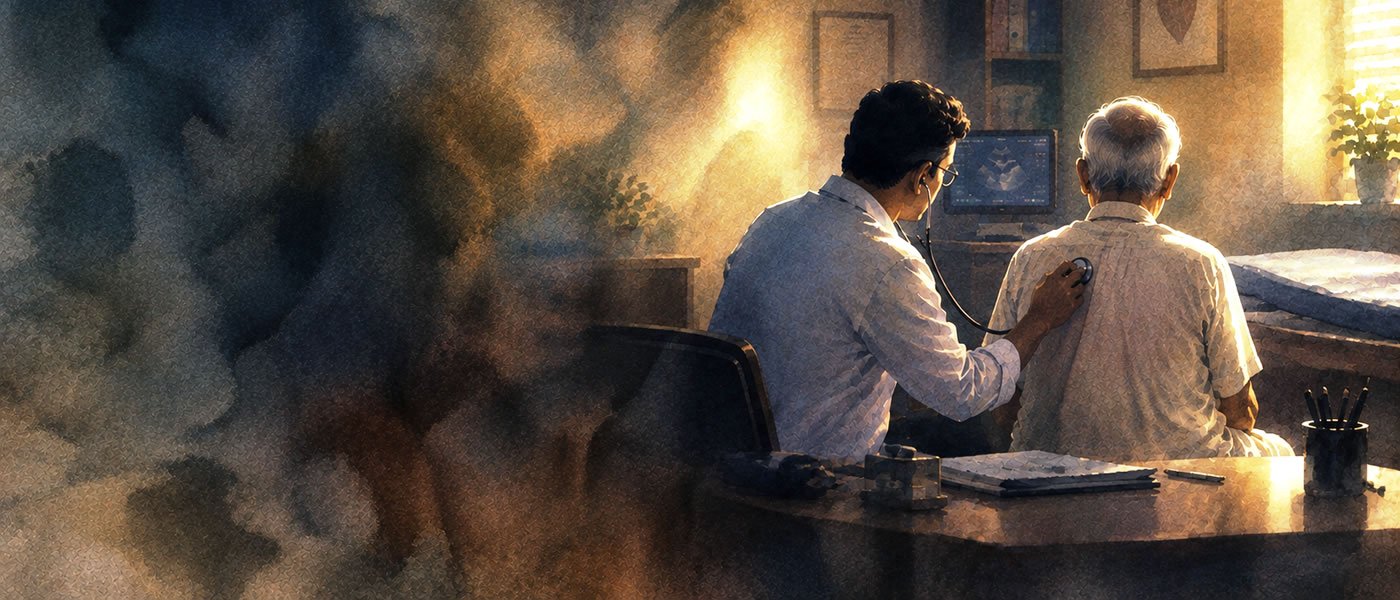
When I enter a consultation room, the patient usually thinks I am going to talk with them.
The relative sitting beside them thinks so too.
And, of course, they are right.
I ask what brought them to me.
“What exactly are you feeling?”
“When did it start?”
“Where does it happen?”
“What makes it worse?”
“What makes it better?”
They answer.
Sometimes immediately.
Sometimes after thinking.
Sometimes after looking at the person accompanying them, just to make sure they haven’t forgotten something.
I listen.
Carefully.
Because in a consultation, the answer to one simple question often creates the next question in my mind.
And sometimes, that next question is more important than the first.
A patient may tell me, “Doctor, I have chest discomfort.”
That gives me a starting point.
But I want to know more.
When does it happen?
What were you doing?
Were you walking?
Climbing stairs?
Resting?
Does it stop when you stop?
Has anything changed recently?
And then, sometimes, comes a small sentence almost casually.
“I thought it was nothing.”
That is when I become particularly interested.
Because the thing a patient considers too small to mention may be exactly what I need to know.
So I keep asking.
Not more questions for the sake of asking.
The next right question.
Patients sometimes arrive with a thick file.
Reports.
Scans.
Blood tests.
Prescriptions.
Previous opinions.
There may be pages of information.
And yet, after going through them, I may still look up and ask:
It is not because I don’t value the reports.
I do.
They tell me what has been measured.
But the patient tells me what has been lived.
A report may tell me what the heart looked like on a particular day.
The patient can tell me what life felt like on that day.
And somewhere between those two, another clue may be waiting.

A symptom that appears during exertion tells me something.
One that disappears with rest tells me something else.
A change in frequency matters.
A change in intensity matters.
Even the absence of a symptom can matter.
The history gives me clues.
The examination gives me more.
The investigations allow me to see what I cannot see directly.
Slowly, individual pieces begin to connect.
And when they do, my question changes.
I am no longer asking only:
“What is this?”
I start asking:
“Why is this happening?”
And then:
“Why here?”
“Why now?”
This is the part of medicine I find particularly fascinating.
A disease does not simply arrive and announce itself.
It often finds an opportunity.
Something may have changed in the body’s environment.
A pathway may have become favourable.
A defence may have weakened.
An imbalance may have appeared.
And suddenly, something that was once difficult for the disease becomes easier.
I sometimes imagine it almost like an unwanted guest discovering an unexpectedly comfortable room.
It looks around.
The conditions seem favourable.
And perhaps it quietly thinks:
“Well… I could stay here.”
That makes me wonder:
What allowed you to settle in?
What are you depending upon?
What makes you stronger?
What makes you weaker?
Where are you vulnerable?
I don’t necessarily ask these questions aloud.
But they are often running quietly in my mind while the patient is answering mine.
At some point, listening is no longer enough.
I have to decide what the patient needs.
This becomes particularly important to me because I am both a physician and a structural heart interventionist.
When a patient first sits across from me, I deliberately put the interventionist aside.
I want to be a physician first.
I want to understand the person.
The symptoms.
The history.
The whole clinical picture.
Because knowing that I can intervene is not the same as knowing that I should.
The question is not:
“What procedure can I do?”
It is:
“What does this patient actually need?”
Sometimes the answer is medical treatment.
Sometimes it is observation.
Sometimes it is lifestyle modification or careful follow-up.
And sometimes there is a structural problem that genuinely requires intervention.
Only then does another part of me step forward.
When intervention becomes necessary, my thinking becomes more technical.
I study the anatomy.
I examine the imaging.
I think about access, timing, precision and risk.
The physician has understood the problem.
Now the interventionist has to act on that understanding.
But even here, the procedure is not the destination.
It is simply the next move in the strategy.
The objective remains the same:
change what needs to be changed.
And when it is done, something else changes too.
When the procedure is over, I look at the patient differently again.
The structural heart interventionist in me steps back.
The physician returns.
And my questions change once more.
I am no longer asking:
“What can I fix?”
I am asking:
“What happens now?”
How is the heart responding?
How is the patient feeling?
What else needs attention?
Has the situation changed?
Because correcting a structural problem does not necessarily mean that every part of the story has ended.
The intervention may have changed one part of the picture.
Now I want to understand what happens next.
And this is where I began to look at my own consultations a little differently.
Who was I really talking to?
The patient, certainly.
I was listening to their story.
Understanding their fears.
Hearing what they were experiencing.
But then I thought about the questions again.
“When did you start?”
“What brings you on?”
“What makes you worse?”
“What makes you better?”
“What changed?”
“Where are you vulnerable?”
Suddenly, I realised that these questions had another listener.
The disease.
Perhaps I had been talking to it all along.
The patient was my storyteller.
The symptoms were its language.
The examination gave me evidence.
The investigations left fingerprints.
And my questions?
Maybe many of us physicians have been doing this for years without ever putting it into words.
We call it history-taking.
We call it clinical assessment.
We call it diagnosis.
All of those are true.
But perhaps, underneath all of them, there is another conversation taking place.
What Would Make You Leave?
Once I begin to understand what gives a disease its advantage, another question becomes possible.
Not simply:
“How do I treat you?”
But:
“What would make you leave?”
Sometimes the answer is medication.
Sometimes it is changing the conditions that allowed the disease to flourish.
Sometimes it is blocking what it depends upon.
Sometimes it is strengthening what the body needs.
And sometimes, when the problem is structural, it means intervening and physically changing what has gone wrong.
The strategy changes.
The conversation changes.
Even my role changes.
But the purpose remains the same:
to take away the advantage the disease has found.
When treatment works, the balance begins to change.
The conditions that once favoured the disease are no longer quite the same.
Its advantage begins to disappear.
The body starts reclaiming its space.

And if I allow myself one little moment of imagination, I can almost picture the disease looking around.
It had settled in quite comfortably.
It thought it had found a safe place.
But now things are different.
Perhaps it looks around and says:
“Hey… wait a minute. I’m not safe here anymore!” 😃
I wouldn’t mind hearing that.
Because perhaps that is one of the simplest ways I can describe what I hope to achieve.
Not merely to make the disease uncomfortable.
But to make the place it once considered home no longer suitable for it.
And to help the person sitting across from me feel at home in their own body again.
Perhaps that is the conversation I have really been having all along.
I listen to the person.
I question the disease.
I choose the strategy.
I intervene when necessary.
And then I listen again.
Because ultimately, medicine is not only about finding what is wrong.
It is about understanding what is happening well enough to change its course.
Until the disease loses its advantage.
The body reclaims its space.
And the person gets their life back.
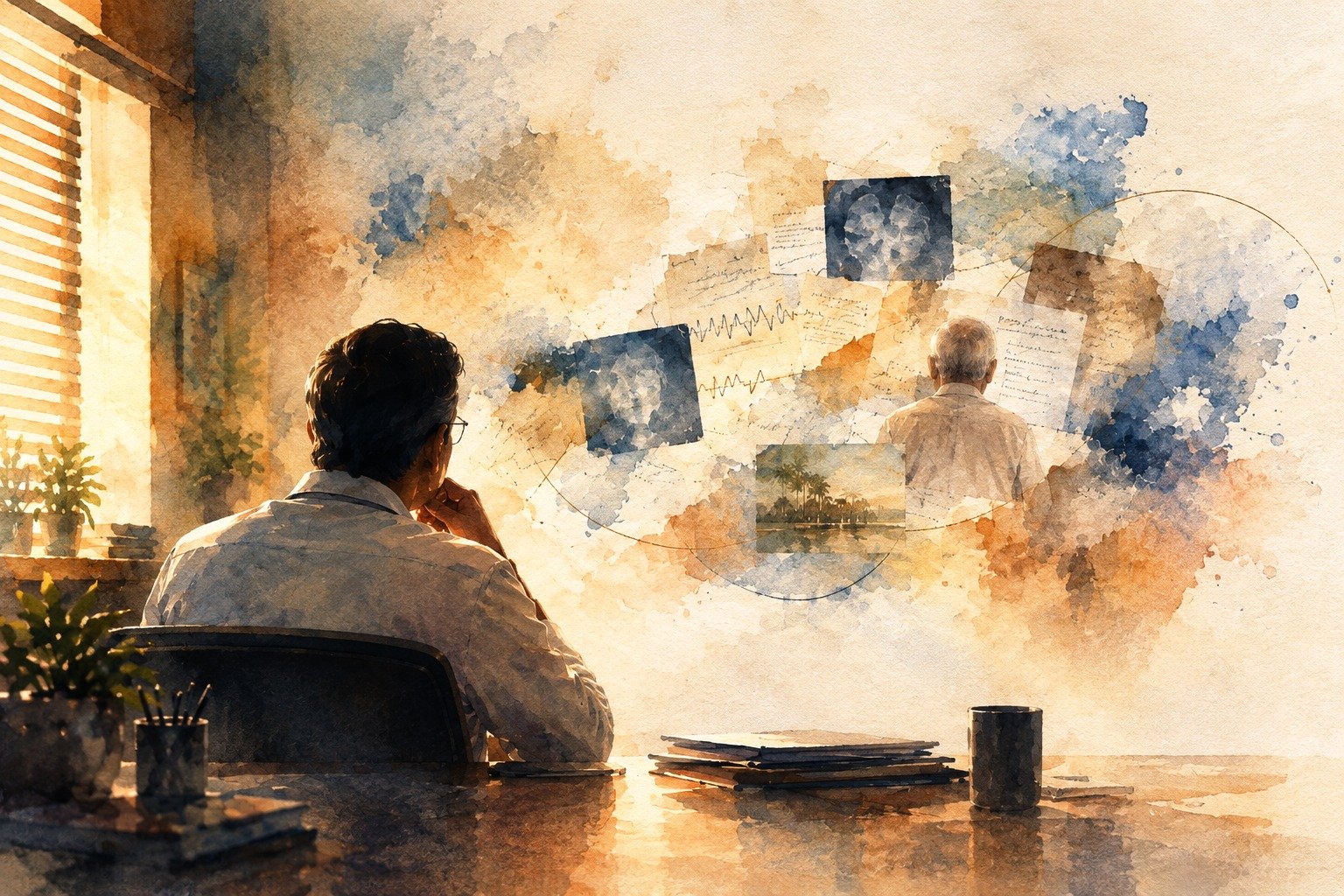
A symptom that appears during exertion tells me something.
One that disappears with rest tells me something else.
A change in frequency matters.
A change in intensity matters.
Even the absence of a symptom can matter.
The history gives me clues.
The examination gives me more.
The investigations allow me to see what I cannot see directly.
Slowly, individual pieces begin to connect.
And when they do, my question changes.
I am no longer asking only:
“What is this?”
I start asking:
“Why is this happening?”
And then:
“Why here?”
“Why now?”
This is the part of medicine I find particularly fascinating.
A disease does not simply arrive and announce itself.
It often finds an opportunity.
Something may have changed in the body’s environment.
A pathway may have become favourable.
A defence may have weakened.
An imbalance may have appeared.
And suddenly, something that was once difficult for the disease becomes easier.
I sometimes imagine it almost like an unwanted guest discovering an unexpectedly comfortable room.
It looks around.
The conditions seem favourable.
And perhaps it quietly thinks:
“Well… I could stay here.”
That makes me wonder:
What allowed you to settle in?
What are you depending upon?
What makes you stronger?
What makes you weaker?
Where are you vulnerable?
I don’t necessarily ask these questions aloud.
But they are often running quietly in my mind while the patient is answering mine.
At some point, listening is no longer enough.
I have to decide what the patient needs.
This becomes particularly important to me because I am both a physician and a structural heart interventionist.
When a patient first sits across from me, I deliberately put the interventionist aside.
I want to be a physician first.
I want to understand the person.
The symptoms.
The history.
The whole clinical picture.
Because knowing that I can intervene is not the same as knowing that I should.
The question is not:
“What procedure can I do?”
It is:
“What does this patient actually need?”
Sometimes the answer is medical treatment.
Sometimes it is observation.
Sometimes it is lifestyle modification or careful follow-up.
And sometimes there is a structural problem that genuinely requires intervention.
Only then does another part of me step forward.
When intervention becomes necessary, my thinking becomes more technical.
I study the anatomy.
I examine the imaging.
I think about access, timing, precision and risk.
The physician has understood the problem.
Now the interventionist has to act on that understanding.
But even here, the procedure is not the destination.
It is simply the next move in the strategy.
The objective remains the same:
change what needs to be changed.
And when it is done, something else changes too.
When the procedure is over, I look at the patient differently again.
The structural heart interventionist in me steps back.
The physician returns.
And my questions change once more.
I am no longer asking:
“What can I fix?”
I am asking:
“What happens now?”
How is the heart responding?
How is the patient feeling?
What else needs attention?
Has the situation changed?
Because correcting a structural problem does not necessarily mean that every part of the story has ended.
The intervention may have changed one part of the picture.
Now I want to understand what happens next.
And this is where I began to look at my own consultations a little differently.
Who was I really talking to?
The patient, certainly.
I was listening to their story.
Understanding their fears.
Hearing what they were experiencing.
But then I thought about the questions again.
“When did you start?”
“What brings you on?”
“What makes you worse?”
“What makes you better?”
“What changed?”
“Where are you vulnerable?”
Suddenly, I realised that these questions had another listener.
The disease.
Perhaps I had been talking to it all along.
The patient was my storyteller.
The symptoms were its language.
The examination gave me evidence.
The investigations left fingerprints.
And my questions?
Maybe many of us physicians have been doing this for years without ever putting it into words.
We call it history-taking.
We call it clinical assessment.
We call it diagnosis.
All of those are true.
But perhaps, underneath all of them, there is another conversation taking place.
What Would Make You Leave?
Once I begin to understand what gives a disease its advantage, another question becomes possible.
Not simply:
“How do I treat you?”
But:
“What would make you leave?”
Sometimes the answer is medication.
Sometimes it is changing the conditions that allowed the disease to flourish.
Sometimes it is blocking what it depends upon.
Sometimes it is strengthening what the body needs.
And sometimes, when the problem is structural, it means intervening and physically changing what has gone wrong.
The strategy changes.
The conversation changes.
Even my role changes.
But the purpose remains the same:
to take away the advantage the disease has found.
When treatment works, the balance begins to change.
The conditions that once favoured the disease are no longer quite the same.
Its advantage begins to disappear.
The body starts reclaiming its space.

And if I allow myself one little moment of imagination, I can almost picture the disease looking around.
It had settled in quite comfortably.
It thought it had found a safe place.
But now things are different.
Perhaps it looks around and says:
“Hey… wait a minute. I’m not safe here anymore!” 😃
I wouldn’t mind hearing that.
Because perhaps that is one of the simplest ways I can describe what I hope to achieve.
Not merely to make the disease uncomfortable.
But to make the place it once considered home no longer suitable for it.
And to help the person sitting across from me feel at home in their own body again.
Perhaps that is the conversation I have really been having all along.
I listen to the person.
I question the disease.
I choose the strategy.
I intervene when necessary.
And then I listen again.
Because ultimately, medicine is not only about finding what is wrong.
It is about understanding what is happening well enough to change its course.
Until the disease loses its advantage.
The body reclaims its space.
And the person gets their life back.
Dr. John Jose E
Disclaimer:
The views expressed in my articles are my personal perspectives, shared for educational purposes and professional discussion. They are expressed in an individual capacity and do not necessarily represent the official views, policies, or positions of the organisations or institutions with which I am associated.
The information presented is intended for general awareness and education. It should not be considered a substitute for individual medical consultation, diagnosis or treatment. Medical decisions should be made in consultation with an appropriately qualified healthcare professional who can assess the patient’s individual circumstances. In a medical emergency, seek immediate medical assistance.