THE HEART AHEAD
Thought Leadership
Dr. John Jose E
Senior Interventional Cardiologist |
Structural Heart Specialist |
TAVI Specialist
 August 15, 2026
 10 minutes read
August 15, 2026
10 minutes read
From my first TAVI experience in Germany to the many procedures and patients who have shaped my journey, a personal reflection on how transcatheter heart valve care has evolved and where I believe it is heading.
There are moments in medicine when progress is measured not simply by the introduction of a new technology, but by a fundamental change in what we believe is possible for our patients.
For me, Transcatheter Aortic Valve Implantation (TAVI) represents one of those defining moments.
When I first encountered TAVI, it was still an emerging therapy. The idea that a severely diseased aortic valve could be replaced through a catheter, without conventional open heart surgery, was beginning to transform the way heart valve disease was approached in many parts of the world.
I was drawn to this field because I could see its potential to offer new possibilities to patients who previously had limited treatment options.
Yet I also realised that a procedure as transformative as TAVI could never be mastered through textbooks alone.
To truly understand it, I needed to learn from those who were shaping its future. I needed to observe their approach, understand their decision making and appreciate the philosophy that guided every procedure.
That desire eventually took me to Germany.
Looking back today, I realise that the greatest lessons I have learned were never about technology alone.
They were about patients.
My journey in cardiology began at Christian Medical College, Vellore, where I completed my MBBS, MD in Medicine and DM in Cardiology. Driven by a desire to expand my expertise in interventional cardiology, I later travelled to Germany for advanced fellowship training at Segeberger Kliniken GmbH, an academic teaching hospital affiliated with the Universities of Kiel, Lübeck and Hamburg.
I subsequently received specialised training in Structural Heart Interventions at the Leipzig Heart Center, while gaining valuable exposure at several leading cardiac centres across Europe.
Those years shaped far more than my technical skills.
They shaped the way I think about medicine.
Germany was among the countries leading the early evolution of structural heart intervention. For a young cardiologist, it was a rare opportunity to witness a field that was redefining the treatment of heart valve disease.
One of the greatest privileges of that journey was learning under Professor Dr. Mohamed Abdel Wahab.
He taught me that successful structural heart intervention is never simply about performing a technically perfect procedure.
It begins long before the patient enters the catheterization laboratory, with careful assessment, thoughtful planning and a deep understanding of what is truly best for each individual patient.
That philosophy has remained a guiding principle throughout my career.
It was also in Germany that I participated in my first TAVI procedure.
At that time, I could not have imagined how profoundly that experience would influence the direction of my professional life.
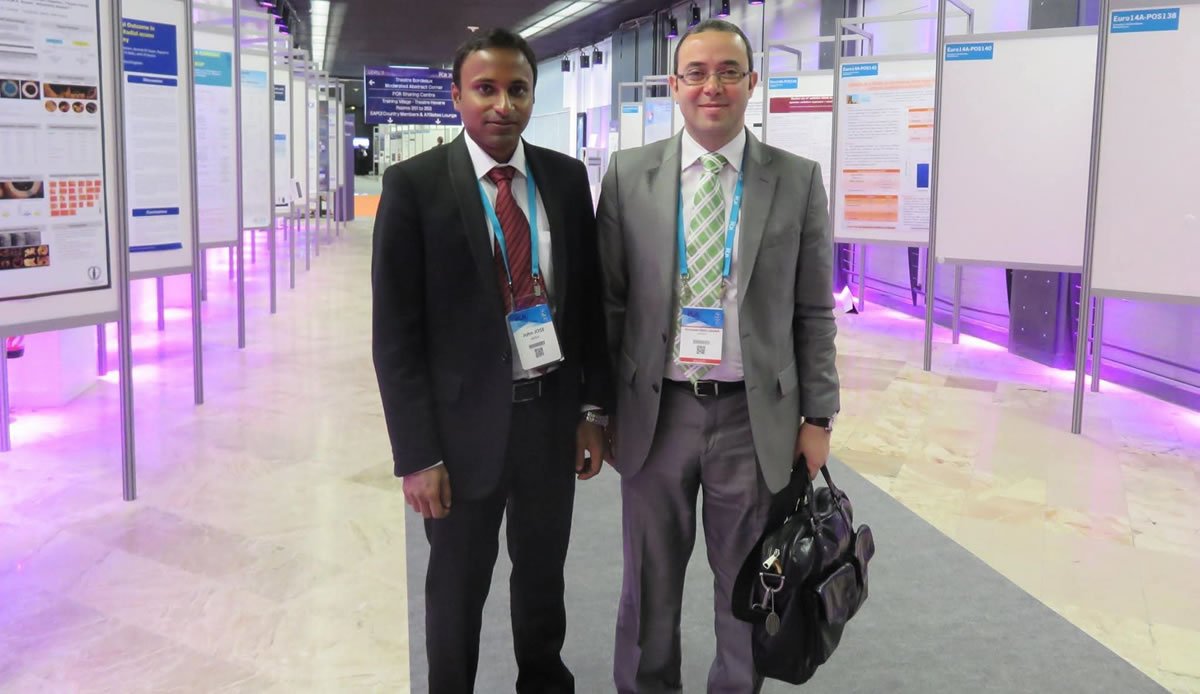
It was in Germany that I would have my first experience participating in a TAVI procedure.
That experience would mark the beginning of a journey that would eventually become a defining part of my professional life.
I still remember walking into the catheterization laboratory to assist with my first real-time TAVI procedure, performed by my mentor, Dr. Mohamed Abdel Wahab.
The atmosphere was unlike anything I had experienced before.
There was no unnecessary conversation or movement. Every member of the Heart Team understood their role, and the procedure unfolded with remarkable calmness, precision and mutual trust.
The patient was an elderly individual with severe symptomatic aortic stenosis who was not considered suitable for conventional open heart surgery.
At that moment, I realised this was much more than an innovative procedure.
It represented hope.
As the procedure progressed, I watched the transcatheter heart valve being carefully crimped and loaded onto the delivery system. It was extraordinary to see such a sophisticated device compressed into a catheter and then, within a few minutes, deployed inside a beating heart to restore valve function.
Professor Dr. Abdel Wahab patiently explained every step, demonstrating not only the technical aspects of the procedure but also the clinical reasoning behind every decision.
One moment remains vividly etched in my memory.
After the valve was successfully implanted, I was asked to perform the post procedural echocardiographic assessment.
For the first time, I watched the delicate leaflets of a transcatheter heart valve opening and closing beautifully on the screen.
It was a moment of genuine wonder.
I realised that I was witnessing the future of heart valve therapy unfold before my eyes.
Later, when I visited the patient in the intensive care unit, seeing the recovery reinforced something I have never forgotten.
TAVI was not simply about replacing a diseased valve.
It was about restoring dignity, independence and hope to people who previously had very few treatment options.
That first experience shaped my career in ways I could never have anticipated.
It taught me that being an interventional cardiologist is about much more than mastering complex procedures.
It is about combining technical excellence with sound judgement, compassion and teamwork to achieve the best possible outcome for every patient.
From that day onwards, I knew that structural heart intervention would become an important part of my professional journey.
That first TAVI procedure in Germany changed more than the direction of my career.
It changed the way I viewed the future of heart valve care.
For decades, the treatment pathway for severe valve disease was relatively straightforward. When a valve needed replacement, conventional open heart surgery was often the principal option. It transformed countless lives and remains an essential part of modern heart valve care.
But medicine never stands still.
Over the past two decades, structural heart interventions have fundamentally changed the way we approach valve disease. Procedures that once required major surgery can now, in carefully selected patients, be performed through minimally invasive techniques that may reduce recovery time and offer new possibilities to those who previously had limited options.
TAVI has become one of the most remarkable examples of that transformation.
Yet the true story of TAVI is not about the technology itself.
It is about the patient.
One of the greatest lessons modern medicine has taught us is that there is rarely a single treatment that is right for everyone.
Two patients may have the same diagnosis, yet their age, anatomy, overall health, lifestyle and personal expectations may lead us towards entirely different treatment strategies.
The question is no longer simply:
“Can we replace this valve?”
Today, the more important question is:
“What is the best treatment for this particular patient?”
That shift, from treating a disease to caring for an individual, is, in my view, one of the defining changes in contemporary structural heart care.
Technology gives us more possibilities than ever before.
But wisdom lies in knowing which possibility is right for each patient.
Complex heart care is rarely the work of one individual.
The modern Heart Team brings together different areas of expertise: interventional cardiologists, cardiac surgeons, imaging specialists, anaesthesiologists, nurses and other healthcare professionals, depending on the needs of each patient.
Each brings a different perspective.
The interventional cardiologist may focus on the technical feasibility of a transcatheter procedure. The cardiac surgeon may offer an important perspective on surgical options and long term outcomes. The imaging team helps us understand the patient’s anatomy in extraordinary detail. Other specialists may help us assess frailty, kidney function, lung disease or other factors that influence the patient’s overall risk.
The strength of this approach lies in bringing these perspectives together.
One of the most important lessons I carried with me from my early experience in Germany was that the best decisions are often made when expertise is shared.
No single physician sees everything.
A strong Heart Team brings together different perspectives, challenges assumptions and helps us choose the right treatment for the individual patient.
Ultimately, the goal is not to decide which procedure is best in isolation, but to determine which treatment offers the best possible outcome for the person sitting in front of us.
When I participated in my first TAVI procedure in Germany, I was captivated by the elegance of the technique.
Today, what continues to inspire me is not the procedure itself.
It is the people.
No two patients are ever truly alike.
Each arrives with a unique story, different hopes, different fears and different expectations.
Over the years, my patients have become my greatest teachers.
They have taught me that experience should never be measured simply by the number of procedures we perform.
It should be measured by what every patient teaches us.
When I returned to India, I never imagined that structural heart intervention would become such a defining part of my professional life.
The principles I learned in Germany, careful planning, meticulous imaging, thoughtful patient selection and genuine teamwork, became part of the professional philosophy I have carried throughout my career.
Much has changed since those early years.
Devices have become safer.
Imaging has become more sophisticated.
Procedures have become less invasive.
Our understanding of structural heart disease continues to evolve.
Yet every time I walk into the Cath Lab, I still feel the same sense of responsibility I experienced during my very first TAVI.
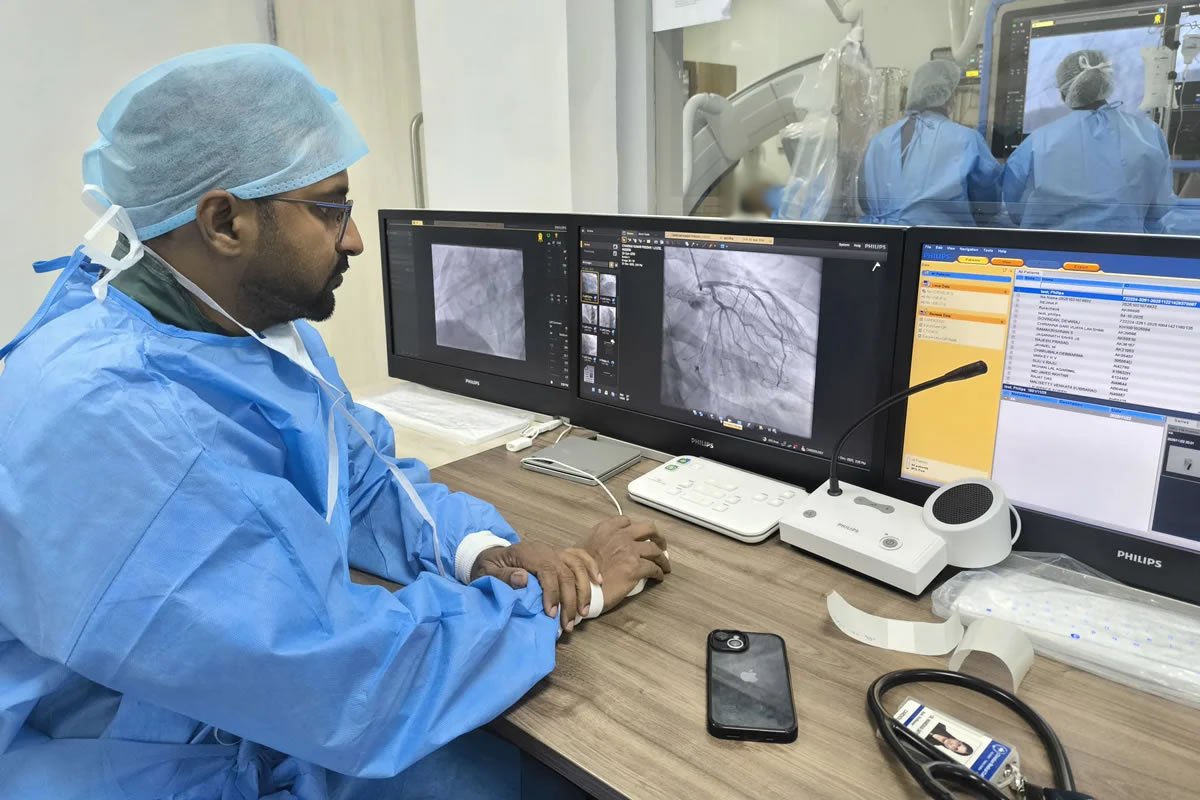
Experience has certainly made me more confident.
But it has also reinforced the importance of humility, because every patient continues to teach us something new.
Every successful procedure reminds me that technology alone never guarantees success.
Preparation.
Judgement.
Teamwork.
Compassion.
Respect for every patient.
These values remain just as important today as they were when I first entered a Cath Lab in Germany.
Looking back, I realise that my journey has never really been about the number of procedures I have performed.
It has been about the patients who entrusted me with their care, the mentors who shaped my thinking, and the colleagues with whom I have had the privilege of working.
Medicine will continue to evolve.
Technology will continue to advance.
New devices will emerge. Artificial intelligence is likely to transform the way we diagnose, plan and deliver treatment. Procedures that seem extraordinary today may become routine tomorrow.
But if there is one lesson that has remained constant from my first TAVI procedure in Germany to every procedure since, it is this:
We may implant valves. But what we truly restore is hope.
I believe that is what heart valve care has always been about.
And I hope it always will be.
Dr. John Jose E
Disclaimer:
The views expressed in my articles are my personal perspectives, shared for educational purposes and professional discussion. They are expressed in an individual capacity and do not necessarily represent the official views, policies, or positions of the organisations or institutions with which I am associated.
The information presented is intended for general awareness and education. It should not be considered a substitute for individual medical consultation, diagnosis or treatment. Medical decisions should be made in consultation with an appropriately qualified healthcare professional who can assess the patient’s individual circumstances. In a medical emergency, seek immediate medical assistance.