THE HEART AHEAD
Thought Leadership

The New Era of Heart Valve Care: What Has Changed and What Lies Ahead

From my first TAVI experience in Germany to more than 850 procedures later, a personal reflection on how transcatheter heart valve care has evolved and where I believe it is heading.

Dr. John Jose E
Senior Interventional Cardiologist |
Structural Heart Specialist |
TAVI Specialist

August 15, 2026 · 12 minutes read

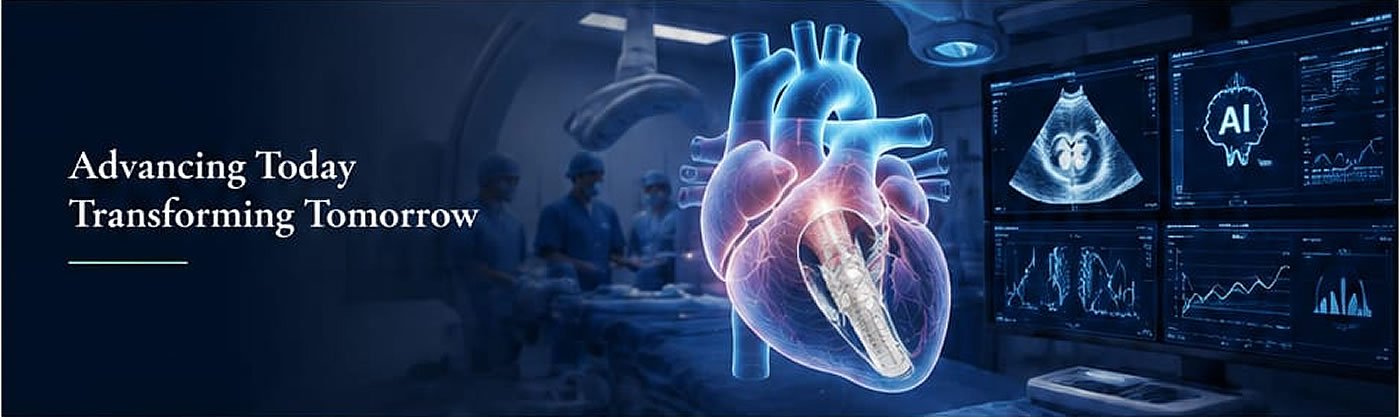
Illustrative representation. Not an actual Cath Lab photograph.

There are moments in medicine when progress is measured not simply by a new technology, but by a fundamental change in what we believe is possible for a patient.

For me, transcatheter aortic valve implantation, or TAVI, represents one of those moments.

I still remember the time when TAVI was emerging as a new possibility in the treatment of severe aortic valve disease. The idea that a diseased aortic valve could be replaced through a catheter, without conventional open heart surgery, was transforming the way cardiologists around the world were thinking about the future of heart valve care.

I was drawn to this emerging field because I could see that it was going to change the way we treated patients with severe valve disease.
But I also knew that a new technology cannot be mastered simply by reading about it.

You have to learn from those who are pioneering it.

You have to see it being done.

You have to understand not only the technique, but also the judgement behind it.

That realisation took me to Germany.

The Journey That Began In Germany

My journey in cardiology began at Christian Medical College, Vellore, where I completed my MBBS, MD in Medicine and DM in Cardiology. I subsequently pursued advanced fellowship training in Interventional Cardiology at Segeberger Kliniken GmbH, Germany, an academic teaching hospital affiliated with the Universities of Kiel, Lübeck and Hamburg. I later received advanced training in Structural Heart Interventions at the Leipzig Heart Center, Germany, along with extensive practical exposure at leading cardiac centres across Europe.

That journey played an important role in shaping my approach to interventional and structural heart care and, eventually, in bringing advanced minimally invasive valve therapies to patients in India and beyond.

Germany was among the countries at the forefront of the early development of TAVI and structural heart intervention. For me, the opportunity to learn in that environment was an important step in my professional journey.

This is where my journey with TAVI truly began.

I still remember arriving at Segeberger Kliniken GmbH (Herzzentrum) in Germany and meeting Professor Dr. Mohamed Abdel-Wahab. At that stage, TAVI was still a relatively new and evolving field, and I was eager to understand not only how the procedure was performed, but also how experienced structural heart teams approached each patient, assessed their individual needs and made decisions in situations where there was often no simple answer.

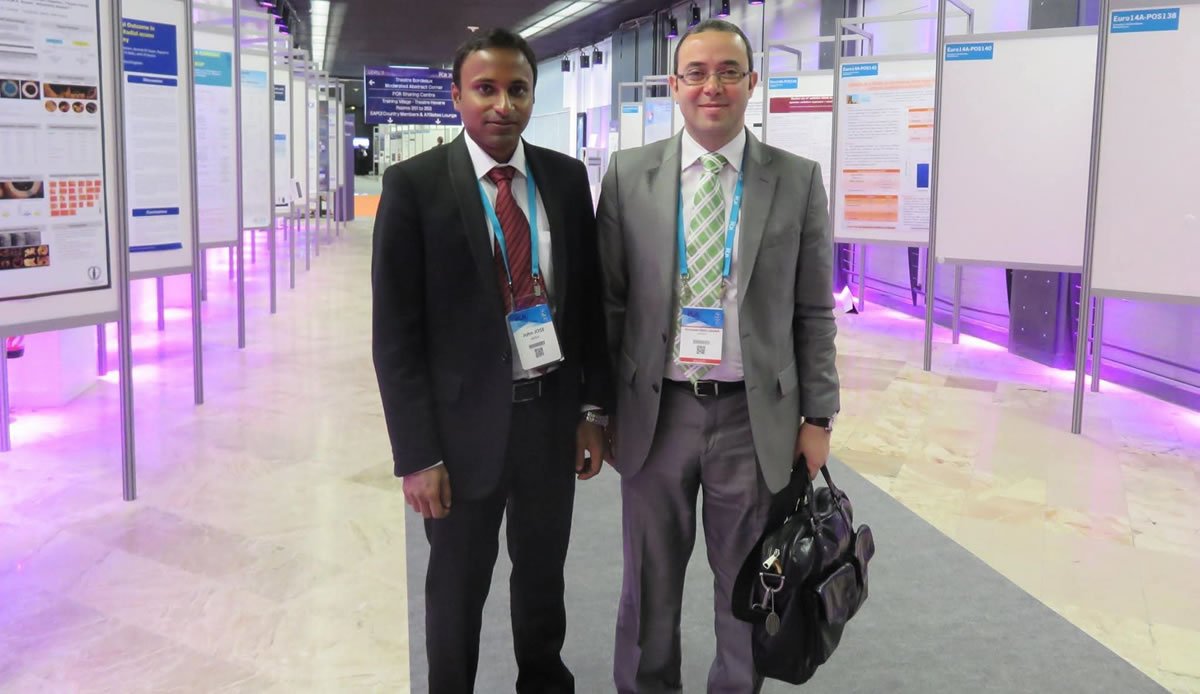
Dr. John Jose with his mentor, Professor Dr. Mohamed Abdel-Wahab, during his early TAVI experience in Germany.

It was in Germany that I would have my first experience participating in a TAVI procedure.

That experience would mark the beginning of a journey that would eventually become a defining part of my professional life.

I still remember the first time I entered the catheterization laboratory in Germany to witness and participate in a Transcatheter Aortic Valve Implantation (TAVI). The atmosphere was unlike anything I had experienced before. There was a sense of quiet confidence in the room, with only two operators performing the procedure.
The patient, an elderly individual with severe symptomatic aortic stenosis who had no suitable surgical option, reminded me that this was not simply an innovative procedure. It was a life changing opportunity.

As the procedure began, I felt a mixture of excitement, anticipation and responsibility. I had read extensively about TAVI, but seeing the procedure performed with such precision was inspiring.
One of the moments that fascinated me most was watching the valve being meticulously crimped and loaded onto the delivery system. It was remarkable to see how such a complex device could be compressed into a catheter, only to be deployed moments later to restore the function of a diseased aortic valve.

My mentor, Professor Dr. Mohamed Abdel-Wahab, explained each step with remarkable composure, teaching me not only the technical aspects of the procedure but also the clinical reasoning behind every decision.

The moment the valve was deployed successfully and immediate haemodynamic improvement was observed remains etched in my memory. It was extraordinary to witness a critically diseased valve being replaced within minutes without open heart surgery.

The relief and satisfaction shared by the entire team were unmistakable.

Soon afterwards, my mentor asked me to perform the post procedural echocardiographic assessment. For the first time, I saw the delicate leaflets of a transcatheter heart valve moving beautifully on echocardiography.

It was a moment of immense excitement and wonder. I realised that I was witnessing the future of valve therapy unfold before my eyes.

Later, I saw the patient in the ICU. When I saw the patient recovering comfortably and improving so rapidly, I realised that TAVI represented far more than a technological advancement.

It could restore dignity, independence and hope to patients who previously had very limited options.

That first procedure profoundly shaped my career. It taught me that being a cardiologist is not only about mastering complex interventions. It is also about carrying the responsibility to combine technical excellence, sound judgement, compassion and teamwork to achieve the best possible outcome for every patient.

From that day onwards, I knew that structural heart intervention would become a defining part of my professional life.

That first procedure was not simply about participating in a new intervention.

It was about recognising that the way we treated heart valve disease was beginning to change.

For many years, when a patient developed severe disease of a heart valve, the treatment pathway was relatively straightforward. If the valve needed to be replaced, open heart surgery was often the principal option. For many patients, this was life changing and, in countless cases, life saving. Cardiac surgery has transformed the lives of millions of people and remains an essential part of modern cardiovascular care.

But medicine never stands still.

Over the past few decades, we have witnessed an extraordinary evolution in the way we understand and treat heart valve disease. The development of transcatheter therapies has opened a new chapter in cardiovascular medicine, allowing us to treat selected patients through less invasive approaches and, in many cases, without conventional open heart surgery.
One of the most remarkable examples of this transformation is TAVI.

But the real story of TAVI is not about a device or a procedure.

It is about the patient.

From Treating The Disease To Treating The Person

One of the most important changes in modern medicine is the recognition that there is no single treatment that is right for every patient.

Two people may have the same valve disease, yet their treatment options may be completely different.

Their age, general health, anatomy, frailty, previous surgeries, other medical conditions, lifestyle and personal expectations all matter.

The question is no longer simply:

“Can we replace this valve?”

The more important question is:

“What is the best treatment for this particular person?”

This shift in thinking is at the heart of contemporary structural heart care.

Modern medicine gives us more options than ever before. But having more options also places a greater responsibility on physicians to choose wisely.

Technology can give us possibilities.

Experience, careful assessment and teamwork help us decide which possibility is right for the patient sitting in front of us.

Ultimately, the goal is not simply to treat a diseased valve.

It is to understand the person who lives with that disease and to choose a treatment that gives them the best possible chance of returning to the life they value.

The Rise Of The Heart Team

Complex heart care is rarely the work of one individual.

The modern Heart Team brings together different areas of expertise: interventional cardiologists, cardiac surgeons, imaging specialists, anaesthesiologists, nurses and other healthcare professionals, depending on the needs of each patient.

Each brings a different perspective.

The interventional cardiologist may focus on the technical feasibility of a transcatheter procedure. The cardiac surgeon may offer an important perspective on surgical options and long term outcomes. The imaging team helps us understand the patient’s anatomy in extraordinary detail. Other specialists may help us assess frailty, kidney function, lung disease or other factors that influence the patient’s overall risk.

The strength of this approach lies in bringing these perspectives together.

One of the most important lessons I carried with me from my early experience in Germany was that the best decisions are often made when expertise is shared.

No single physician sees everything.

A strong Heart Team brings together different perspectives, challenges assumptions and helps us choose the right treatment for the individual patient.

Ultimately, the goal is not to decide which procedure is best in isolation, but to determine which treatment offers the best possible outcome for the person sitting in front of us.

What More Than 850 TAVI Procedures Have Taught Me

Today, after being involved in more than 850 TAVI procedures, I can say with certainty that no two patients are ever truly the same.

The technology has evolved.

The devices have evolved.

Our understanding of the disease has evolved.

But perhaps the most important thing that has evolved is our understanding of the patient.

When I participated in my first TAVI in Germany, I was captivated by the elegance of the procedure, the precision of every step and the seamless coordination of the multidisciplinary Heart Team.

At that time, TAVI was an emerging technology, performed in a relatively small number of specialised centres around the world. I could never have imagined that one day I would return to India and devote a significant part of my professional life to building a comprehensive structural heart programme of my own.

Returning to India and continuing that journey at Christian Medical College, Vellore, was another important chapter in my professional life.

The experience in Germany profoundly influenced the way I approached patient care and programme development. I learned that success in structural heart intervention is never the achievement of a single operator. It depends on meticulous planning, detailed imaging, thoughtful patient selection, technical excellence and, above all, teamwork.

These principles became the foundation of everything we sought to build at Christian Medical College, Vellore.

I have been fortunate to receive the encouragement and support of many colleagues and mentors at CMC, where I serve as Professor and Head of Cardiology Unit II. The vision and support of our institutional leadership, including the Director, Principal, Management, Administrative Officials and Department Heads, created an environment in which innovation and new programmes could grow.

I have also been privileged to work alongside outstanding colleagues such as Dr. Paul George and Dr. Prasad Mathews, whose support, commitment to patient care, academic excellence and collaboration have been invaluable throughout this journey.

Together with dedicated cardiac surgeons, cardiac anaesthesiologists, imaging specialists, intensivists, nurses, technicians, perfusionists and administrative staff, we gradually developed a Heart Team capable of managing complex structural heart interventions.

No programme is built alone.

Every successful procedure is the result of a team working together, often long before the patient enters the cath lab and continuing well after the procedure is completed.

Much has changed since those early days in Germany.

Devices have evolved. Imaging has become more sophisticated. Procedural techniques have become increasingly refined and less invasive. Our understanding of patient selection has also changed significantly, allowing us to offer treatment to patients across a broader spectrum of risk.

Yet, despite these remarkable advances, perhaps the greatest transformation has been within myself.

Experience has undoubtedly made me more confident, but it has also made me more humble and more cautious.

Every successful procedure reminds me that technology alone does not guarantee success. Good judgement, careful preparation, anticipation of complications and respect for every patient remain essential to achieving the best possible outcomes.

The first time I entered a cath lab for TAVI, I was acutely aware that I was part of something new.

Today, even after more than 850 procedures, I still feel a sense of responsibility every time I walk into the cath lab.

The nature of that responsibility may have changed with experience, but it has never diminished.

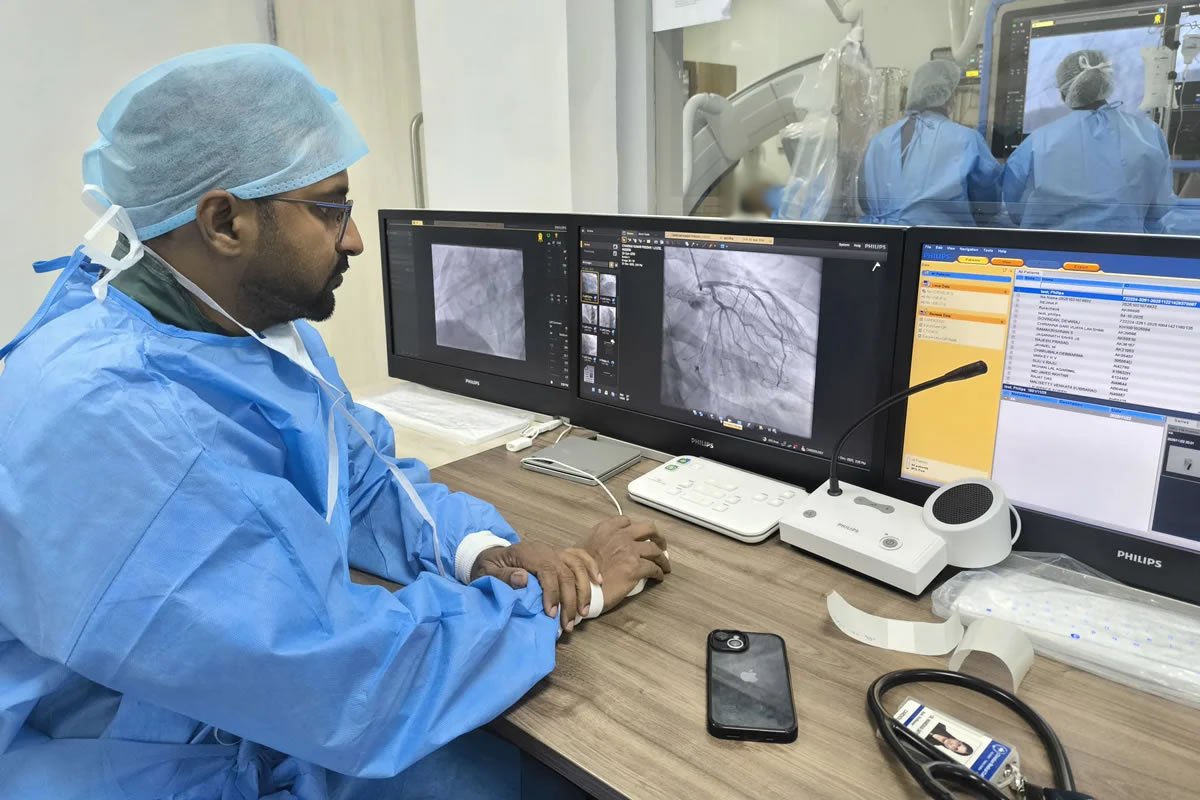
Dr. John Jose in the Cath Lab during a TAVI procedure

Over the years, my patients have been among my greatest teachers.

Every patient has a unique story, and every procedure carries hopes, fears and expectations that extend far beyond the catheterization laboratory.

Some patients travel hundreds of kilometres after exhausting every available treatment option. Others place extraordinary trust in a team they have only just met.

Their courage continually reminds me of the privilege and responsibility of being entrusted with their care.

Among the many memories that remain with me, the most meaningful are not always those inside the catheterization laboratory, but those that follow.

Seeing a patient who once struggled to walk across a room return months later with a smile, speaking of resuming work, attending family celebrations, playing with grandchildren or simply living independently again, is one of the greatest rewards our profession can offer.

Those moments reaffirm something very important to me.

While we implant valves, what we truly restore is quality of life, dignity and hope.

Looking back, the journey from my first TAVI in Germany to the structural heart programme we have built at CMC Vellore has been both professionally fulfilling and deeply humbling.

Every procedure continues to teach me something new.

Every patient strengthens my commitment to excellence.

And every success belongs to the entire Heart Team.

The journey continues, driven by the same sense of wonder I felt when I first watched a transcatheter valve unfold inside a beating human heart.

Every patient teaches us something.

Even when two procedures appear technically similar, the patients themselves may be entirely different. Their anatomy may differ. Their expectations may differ. Their risks may differ. Their definition of a successful outcome may differ.

This is why experience should never be about simply counting procedures.

It should be about learning from every patient and continuously improving the care we provide.

The number may tell us how many procedures we have performed.

It is the patients who teach us how to perform them better.

Technology Is Changing What Is Possible

The progress we have seen in structural heart disease has been remarkable.

Advances in imaging have allowed us to understand the anatomy of the heart with increasing precision. Improvements in valve design and delivery systems have expanded the possibilities of transcatheter treatment. Better patient selection and growing clinical experience have helped us refine how these procedures are performed.

But innovation should never be measured by technology alone.

The true measure of innovation is whether it makes a meaningful difference to a person’s life.

Can a patient breathe more easily?

Can they walk further?

Can they return to their family, their work, their interests and their everyday life?

Can we help an elderly person remain independent for longer?

These are the outcomes that ultimately matter.

For me, the most meaningful advances in medicine are those that allow us to do more for patients while placing less burden on them.

The future of structural heart care will undoubtedly be shaped by better devices, more precise imaging and increasingly sophisticated techniques. But the real progress will come when these advances are translated into safer procedures, better outcomes and greater access to care.

Technology gives us new possibilities.

Our responsibility is to ensure that those possibilities genuinely improve the lives of the people we treat.

What Lies Ahead?

The field of structural heart disease has changed enormously during my years in clinical practice.

I have seen TAVI evolve from a relatively new and highly specialised treatment into an increasingly important part of modern heart valve care. I have seen technology become more refined, imaging become more precise and our understanding of patient selection become more sophisticated.

But I believe we are still at the beginning of the journey.

When I think about the next five to ten years of structural heart care, I believe we are entering another period of significant transformation.

I expect structural heart interventions to become safer, simpler and more personalised. TAVI will continue to evolve, with treatment strategies increasingly tailored to the individual patient and their long term needs.

As technology advances and more cost effective devices become available, I hope that TAVI and other structural heart therapies will become increasingly accessible to patients across India, regardless of their socioeconomic background.

Every patient deserves access to life changing therapies. One of our greatest responsibilities as a medical community is to help make that vision a reality.

Artificial intelligence will also play an increasingly important role in structural heart care. AI has the potential to enhance imaging, improve procedural planning, assist with valve sizing, help predict procedural risks and support long term follow up.

However, I believe AI will complement, not replace, the clinical judgement, experience and compassion of the Heart Team.

Technology can process information.

It cannot replace the trust between a physician and a patient, the wisdom gained through years of experience or the human judgement required when decisions are complex and every patient is different.

The future will also be defined by personalised valve therapy.

Rather than simply asking which valve is the “best,” we will increasingly ask which valve is best for this particular patient.

Anatomical characteristics, age, life expectancy, coronary access, future interventions, valve durability and patient preferences will all influence device selection.

The concept of “one valve fits all” will gradually give way to individualised treatment strategies designed around each patient’s lifetime journey.

This is why lifetime management of valvular heart disease will become increasingly important.

Implanting a valve is not necessarily the end of treatment. It may be the beginning of a lifelong partnership with the patient.

We must think not only about today’s procedure, but also about what the patient’s future may look like. Future coronary access, valve durability, the possibility of re intervention and valve in valve procedures may all need to be considered when making decisions today.

Every decision we make may have consequences that extend over many years.

I also believe that the future of structural heart care will depend increasingly on multidisciplinary collaboration.

Interventional cardiologists, cardiac surgeons, imaging specialists, anaesthesiologists, geriatricians, heart failure specialists, rehabilitation teams and other healthcare professionals will need to work even more closely together.

The strongest programmes will not necessarily be those with the newest technology alone.

They will be those that combine innovation with teamwork, humility and an unwavering commitment to patient centred care.

My greatest hope is for the next generation of cardiologists.

They will inherit technologies and opportunities that my generation could scarcely have imagined. I hope they will continue to challenge existing boundaries, develop new devices, conduct meaningful research and make structural heart interventions safer, more affordable and more accessible to patients around the world.

At the same time, I hope they never lose sight of the values that define our profession: integrity, compassion, humility, curiosity and respect for every patient.

The boundaries between surgery and catheter based treatment will continue to evolve.

New therapies will emerge.

Some treatments that appear experimental today may become routine tomorrow.

The possibilities are difficult to predict, but I believe one principle will remain unchanged.

The future of medicine cannot be defined by technology alone.

It must be defined by the difference that technology makes to human life.

The Patient Remains At The Centre

Looking back, I realise that my journey in structural heart intervention has never been simply about valves, catheters or technology.

It has always been about people.

The patients who place their trust in us.

The mentors who guide us.

The colleagues who work beside us.

And the privilege of helping someone regain the chance to live a fuller and more meaningful life.

When we speak about TAVI, structural heart disease or any other medical innovation, it is easy to become absorbed in the language of devices, procedures, imaging and technology.

But behind every scan is a person.

Behind every procedure is a family waiting for news.

Behind every successful intervention is someone hoping to return to a normal life.

That is why I believe the future of heart valve care must combine the best of science with the best of medicine: innovation with experience, technology with judgement, and expertise with compassion.

We have come a long way since my first TAVI in Germany.

Yet, in many ways, the most important lesson has remained unchanged.

Every patient is different.

Every patient has a story.

And every patient deserves to be treated not simply as a medical condition, but as a person whose hopes, fears, priorities and future matter.

The journey from that first TAVI in Germany to more than 850 procedures and the structural heart programme we have built at CMC Vellore has been both professionally fulfilling and deeply humbling.

Every procedure continues to teach me something new.

Every patient strengthens my commitment to excellence.

And every success belongs to the entire Heart Team.

As structural heart care continues to evolve, I remain inspired by what lies ahead. New technologies will emerge. New therapies will be developed. Some treatments that seem experimental today may become routine tomorrow.

But I believe one principle will remain unchanged.

The future of medicine cannot be defined by technology alone.

It must be defined by the difference that technology makes to human life.

Perhaps that is the greatest lesson I have learned since my first TAVI in Germany.

Every advance in medicine matters only when it ultimately helps us care better for the person in front of us.

And that person will always remain at the centre.

Understanding Your Heart Valve Condition

If you or a family member has been diagnosed with a heart valve condition, understanding the diagnosis and the available treatment options is an important first step.

Discuss your individual situation with your treating cardiologist or a qualified heart valve specialist to understand which approach may be appropriate for you.

Your heart is unique. Your treatment should be, too.

Dr. John Jose E

 office@doctorjohnjose.com